
Home & Garden
Plumber for Low Water Pressure: Causes, Fixes, and Costs
One of the most common household issues many families in Pakistan face is low water pressure. Whether it’s a weak shower flow or taps that...

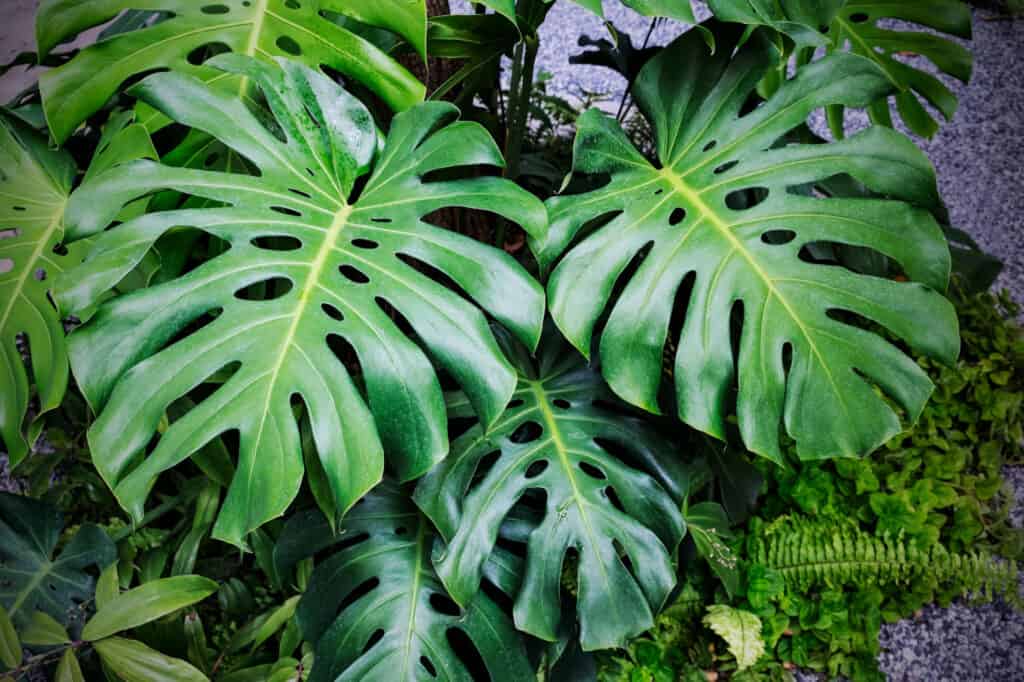
Monstera plants can reach impressive sizes, but their growth potential depends heavily on whether they are grown indoors or outdoors.
The largest and most famous species, Monstera deliciosa, is known for reaching extraordinary sizes in the wild. Mature specimens can have leaves that grow up to 3 feet (90 cm) wide. In rare cases, leaves have been recorded at nearly 5 feet long, making it one of the largest-leafed climbing plants in the world. Outdoors in tropical conditions, a fully grown Monstera deliciosa can cover entire tree trunks with its giant fenestrated leaves.
Different Monstera species have varying leaf sizes:
In short, the largest Monstera species is Monstera deliciosa, with outdoor growth producing record-breaking leaves that can rival any indoor ornamental plant.
The houseplant market has seen record-breaking sales, and rare variegated Monstera varieties are often at the center of it. One notable case was a Variegated Monstera deliciosa ‘Albo Borsigiana’ cutting, which sold for nearly $5,000 at auction. The high price was due to its striking white-and-green marbled leaves and the rarity of producing stable variegation. Collectors are willing to pay thousands for a healthy cutting with multiple nodes because it can propagate into a full plant.
The current record-holders for the most expensive Monstera plants are highly variegated or genetically unique specimens:
These extraordinary prices come down to rarity, visual uniqueness, and collector demand. While most Monstera plants are affordable, rare variegated types have become luxury items, often treated like living art.
Among the dozens of Monstera species, some are considered exceptionally rare due to their slow growth, delicate care needs, or unusual leaf patterns:
Collectors value rare Monstera varieties for several reasons:
Because of these factors, rare Monsteras can sell for hundreds or even thousands of dollars depending on size, health, and leaf variegation.
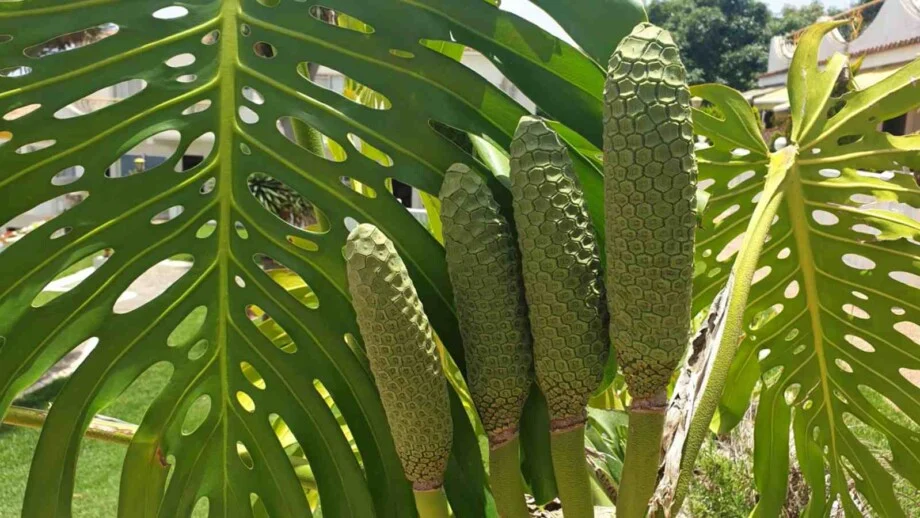
The Monstera deliciosa, often called the “Delicious Monster” or Swiss Cheese Plant, is famous not only for its large, fenestrated leaves but also for its unusual fruit. Native to Central America, this climbing plant produces a long, cone-like fruit that can grow up to 10–12 inches. The fruit is covered in green hexagonal scales that fall off as it ripens.
Yes, the fruit of Monstera deliciosa is edible, but only when it is fully ripe. Eating it before ripening can cause irritation due to the presence of calcium oxalate crystals, which can burn the mouth and throat.
The delicious monster fruit is a unique tropical delicacy, but patience is key—only a fully ripened fruit is safe to enjoy.
The Monstera plant family, especially Monstera deliciosa, stands out for its remarkable size, with leaves that can grow impressively large both indoors and outdoors. Some rare varieties, such as variegated Monsteras, have fetched thousands of dollars at auctions, making them highly valuable among collectors. The rarity of cultivars like Monstera Albo Variegata and Monstera Obliqua adds to the plant’s global appeal and prestige.
Despite its high value and rarity in certain forms, Monstera remains a beloved houseplant worldwide. Its bold, tropical appearance, ease of care, and versatility make it a favorite among both beginner gardeners and seasoned plant enthusiasts. Whether admired for its size, prized for its rarity, or cherished for its beauty, the Monstera continues to be a true icon in the plant world.
https://alibilalelectronics.com/plumber-for-low-water-pressure-causes-fixes-and-costs
 by
by